
The Science of Play: Why It's the Foundation of Real Learning
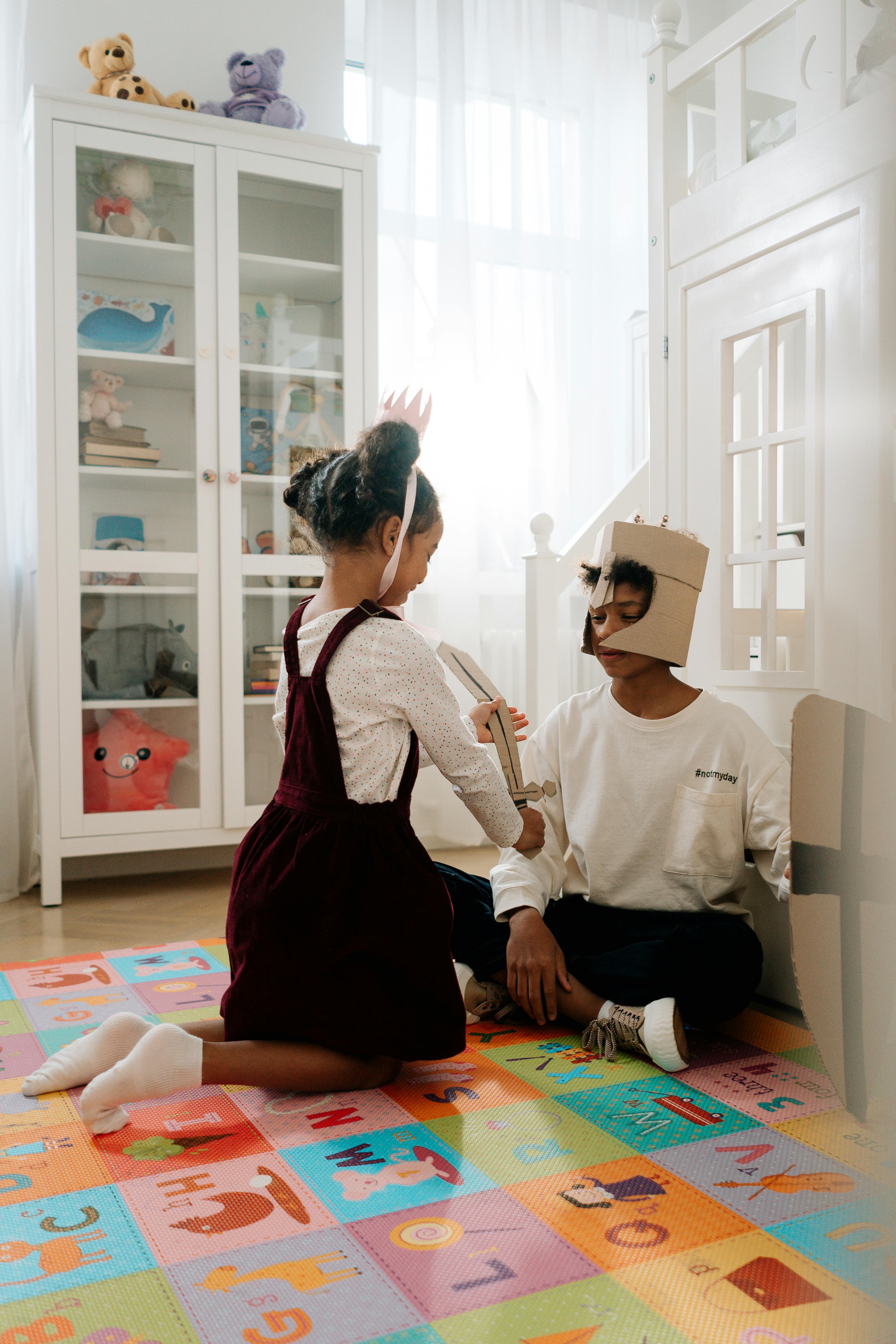
There's a quiet misconception shaping how many people think about learning. It tells us that learning looks like structure, with worksheets, a quiet focus, and measurable output. And play? Play is what happens after the learning is done. Well, if you’re lucky.
But what if that's backwards? What if play isn't a break from learning, but, instead, the very place where the most meaningful learning begins?
At My Learning Circle, we believe learning should reflect how children grow, think, and make sense of the world. When you look at the research, one truth becomes clear. Play isn't optional. It's foundational. The research doesn't just support this, it demands we reconsider how we design learning experiences for children.
What Play-Based Learning Really Means
Play-based learning is often misunderstood and that misunderstanding does real harm. It isn't chaos. It isn't the absence of structure. And it certainly isn't a lack of rigor. Most teacher preparation programs don’t dive too deeply into providing a lot of instruction around play-based learning, even for those who are becoming Early Childhood or grade schoolteachers.
Play-based learning is child-led, curiosity-driven, and intentionally incorporated into lesson plans and supported. It is the process of allowing children to explore ideas, test theories, solve problems, and make meaning through experience while adults guide, extend, and deepen that learning. It’s not about removing purpose. It’s about redefining it. The goal shifts from compliance and output to understanding and agency.
The Science Behind Play
Research across developmental psychology, neuroscience, and education continues to affirm that play is one of the most powerful drivers of human development. Below are three pillars of that evidence.
Play Builds the Brain
During play, children form and strengthen neural connections that support memory, attention, and flexible thinking. These are not passive processes, they are deeply active, generative, and irreplaceable. Play supports the development of executive function skills, including working memory, cognitive flexibility, and self-control which are the very skills that predict long term academic and life success. (Center on the Developing Child, Harvard University, 2016).
Neuroscientist Adele Diamond's research further confirms that play-based environments, particularly those involving physical activity and imaginative engagement, strengthen prefrontal cortex development, the region responsible for planning, impulse control, and complex decision-making. (Diamond, 2013)
These are the skills schools increasingly say they want to build, but they are cultivated through play and must be a part of the daily plan. These skills are not built when children are sitting all day, at a desk, with a worksheet. They are not only reserved for children in the birth to three age range.
Play Develops Social Emotional Intelligence
When children engage in pretend play, cooperative games, or even the occasional conflict that arises during play, they are practicing real-life emotional skills in real time.
Stuart Brown, founder of the National Institute for Play, argues that play is not just beneficial for emotional development, it is essential. Without play, children struggle to develop the adaptability and stress regulation needed for healthy adult life. (Brown & Vaughan, 2009)
The American Academy of Pediatrics reinforces this point, noting that play is fundamental to healthy child development and that reductions in free play time are associated with increases in anxiety, depression, and attentional difficulties in children. (Yogman et al., 2018)
Through play, children learn to navigate social dynamics, regulate emotions, practice empathy, and build the resilience that carries them through challenges long after childhood.
Play Fuels Cognitive and Academic Growth
Play is not separate from academic learning. It is the foundation of it. Research by Kathy Hirsh-Pasek and Roberta Golinkoff demonstrates that guided play supports language development, early literacy, and mathematical thinking more effectively than passive instruction alone and that the benefits are lasting.(Hirsh-Pasek, et al. 2009) While teaching grade school I regularly incorporated opportunities for play-based learning into each of the content areas. Sometimes it was this sort of lesson that allowed a child to grasp a difficult concept.
When children build structures, invent stories, ask questions, and experiment with cause and effect, they are developing problem-solving skills, symbolic thinking, early math concepts, and language fluency. Lev Vygotsky's foundational work on the zone of proximal development further illustrates how play allows children to operate at the edge of their current capabilities, stretching into new understanding with just the right amount of support (Vygotsky, 1978). Oftentimes, that support comes from a sibling or a friend.
Play doesn't compete with academic success. It fuels it. It allows children to have a vision, experiment with their analytical thoughts, and see an activity through with resiliency.
Play Through the Lens of Purposeful Learning
At My Learning Circle, play is never random. It is aligned to a deeper framework of how children learn best, one built on five interconnected principles.
Purposeful Learning
Play becomes most powerful when it connects to meaning. Children are not just doing, they are understanding. Each experience is designed with an intention, even when the child's path through it is entirely their own. In fact, when children are playing together, they teach each other and learn from one another.
Higher-Order Thinking
Open-ended play invites children to analyze, create, and problem-solve. There is no single right answer, which is exactly what makes the thinking deeper. Children who regularly engage in open-ended play demonstrate stronger creative cognition and flexible reasoning (Gray, 2013).
Social-Emotional Learning
Play creates natural, low-stakes opportunities for collaboration, conflict resolution, and emotional awareness. These are not supplemental add-ons to learning, they are essential to it. Emotional intelligence developed in early childhood has a direct bearing on academic outcomes, relationship health, and lifelong wellbeing.
Child-Centered Learning
Play honors the child, their interests, their pace, their curiosity. In doing so, it builds agency and the deep belief that "I can think, explore, and figure things out." Agency is one of the strongest predictors of intrinsic motivation across the lifespan.
Future-Ready Skills
In a world that values adaptability, creativity, and collaboration, play builds exactly what's needed. The World Economic Forum consistently lists complex problem-solving, critical thinking, creativity, and emotional intelligence among the top skills for the future workforce, all cultivated through rich play experiences (World Economic Forum, 2020). In another piece of writing, I discuss the connection between coaching and teaching. I would argue that play, especially in small or large groups, creates fun and a feeling of being part of the team, sometimes working towards a common goal. That is what teamwork and collaboration is made of and what many businesses now cite as a personality trait lacking in many young employees.
The Role of the Adult:A Subtle but Powerful Shift
One of the most meaningful reframes in play-based learning is the role of the adult. Rather than directing every step, the adult becomes an observer, a questioner, and an extender. Anecdotal notes while observing allows a teacher to form a more comprehensive analysis of a child’s learning. You get a full picture of how the child learns and what they can accomplish.It gives you opportunities to understand and support the child in a far greater way that correcting a worksheet that they completed.
This means observing before intervening, resisting the urge to fix or redirect. It means asking open-ended questions that invites deeper thinking rather than confirming a single right answer. It also means extending children's ideas instead of controlling them.
A simple but transformative shift is moving from, "Do it this way" to "What do you think would happen if…?" changes the entire architecture of the learning experience. The child moves from passive recipient to active investigator. This shift is not about stepping back from learning, it is about stepping into it more thoughtfully. The adult's role in play-based learning requires more skill, not less.
What This Looks Like in Real Life
Play-based learning doesn't require elaborate setups or perfect conditions. It is already happening in everyday moments, if we know how to see it.
A child building a fort is exploring engineering, spatial reasoning, and problem-solving.
Pretend play becomes a space for storytelling, personality formation, and emotional processing.
A walk outside becomes a science investigation full of observation, hypothesis, and curiosity.
A disagreement over game rules becomes a lesson in negotiation, fairness, and perspective-taking.
With intentional adult support, these moments become powerful learning experiences. Thematic units, thoughtful prompts, and structured provocations can help parents and educators extend what children are already naturally doing, amplifying the learning without hijacking the play.
Common Concerns and a Gentle Reframe
It's natural to wonder if your child will fall behind? When will they learn to read or do math? Is this enough structure? The research offers genuine reassurance. Skills are not delayed through play; they are developed more deeply. Children who learn through meaningful, engaging, play-based experiences often demonstrate stronger comprehension, retention, and application of skills over time compared to peers in highly structured, direct instruction environments. (Hirsh-Pasek, et al., 2009)
Depth matters more than speed. Engagement drives retention. Children who feel safe, curious, and capable as learners carry those dispositions with them far longer than any worksheet result.
Why This Matters So Much Today
We are raising children in a world that no longer rewards memorization alone. The ability to think, adapt, communicate, create and solve novel problems is what will define success, both professionally and personally.
And yet, many learning environments are still built on outdated models of compliance and standardization. If we want different outcomes for our children, we must be willing to redefine what learning looks like.
Recalibrating learning means aligning it with how children develop. Play is where that alignment begins. You don't need to replicate school at home. You don't need to have all the answers or the most curated environment.
Children are already wired to learn. A parent or teacher’s role is not to replace that instinct, but to nurture it. To create space for curiosity. To ask thoughtful questions. To see play not as a distraction, but as a doorway. Because play isn’t a break from learning.It’s where the most important learning begins.
References
Brown, S., & Vaughan, C. (2009). Play: How it shapes the brain, opens the imagination, and invigorates the soul. Avery/Penguin.
Center on the Developing Child, Harvard University. (2016). Building the brain's "air traffic control" system: How early experiences shape the development of executive function (Working Paper No. 11). https://developingchild.harvard.edu
Diamond, A. (2013). Executive functions. Annual Review of Psychology, 64, 135–168. https://doi.org/10.1146/annurev-psych-113011-143750
Gray, P. (2013). Free to learn: Why unleashing the instinct to play will make our children happier, more self-reliant, and better students for life. Basic Books.
Hirsh-Pasek, K., Golinkoff, R. M., Berk, L. E., & Singer, D. G. (2009). A mandate for playful learning in preschool: Presenting the evidence. Oxford University Press.
Vygotsky, L. S. (1978). Mind in society: The development of higher psychological processes. Harvard University Press.
World Economic Forum. (2020). The future of jobs report 2020. https://www.weforum.org/reports/the-future-of-jobs-report-2020
Yogman, M., Garner, A., Hutchinson, J., Hirsh-Pasek, K., Golinkoff, R. M., & Committee on Psychosocial Aspects of Child and Family Health, Council on Communications and Media. (2018). The power of play: A pediatric role in enhancing development in young children. Pediatrics, 142(3), e20182058. https://doi.org/10.1542/peds.2018-2058